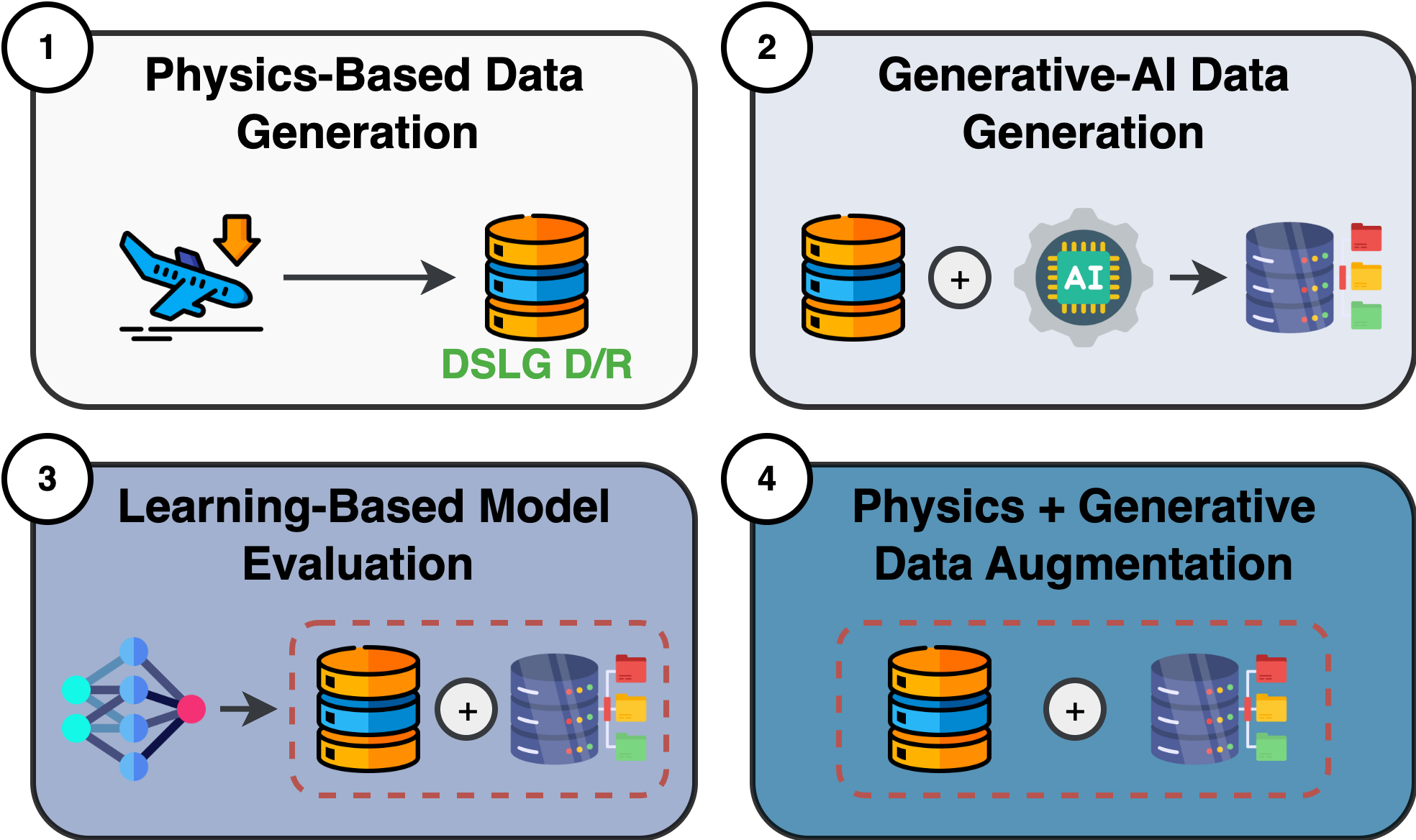
The integrity and reliability of Landing Gear Systems (LGSs) are crucial for aircraft safety. However, the scarcity of real-world fault data hinders the creation of effective Predictive Maintenance (PdM) strategies, especially those that rely on modern Machine Learning (ML) techniques. As a result, this article presents GAIA: the first comprehensive pipeline that enables the creation of digital twins to support PdM in the aviation domain. Specifically, combining multi-physics modeling and data-driven techniques, GAIA allows learning models to achieve superior performance in fault detection and diagnosis tasks. As a use case, we consider a LGS system, and introduce DSLG D/R, a novel dataset specifically designed for LGS fault classification, created in collaboration with Leonardo S.p.A. Our results demonstrate a significant 10.56% improvement in fault classification accuracy compared to other data augmentation methods. To further demonstrate the applicability of our method, we also evaluated it on the Electrical Fault dataset, a well-established benchmark for the diagnosis of power system faults, highlighting the GAIA versatility across different critical safety domains.
TBA.